
JUNK RESPONSE GUIDE
Rodent-Contaminated Rooms After the Contents Are Gone: What to Evaluate Next
A rodent-affected room can look much worse—or sometimes much better—once the contents are removed. The important point is that removing boxes and furniture does not automatically address contamination on the surfaces beneath them.
Look beneath and behind the former contents
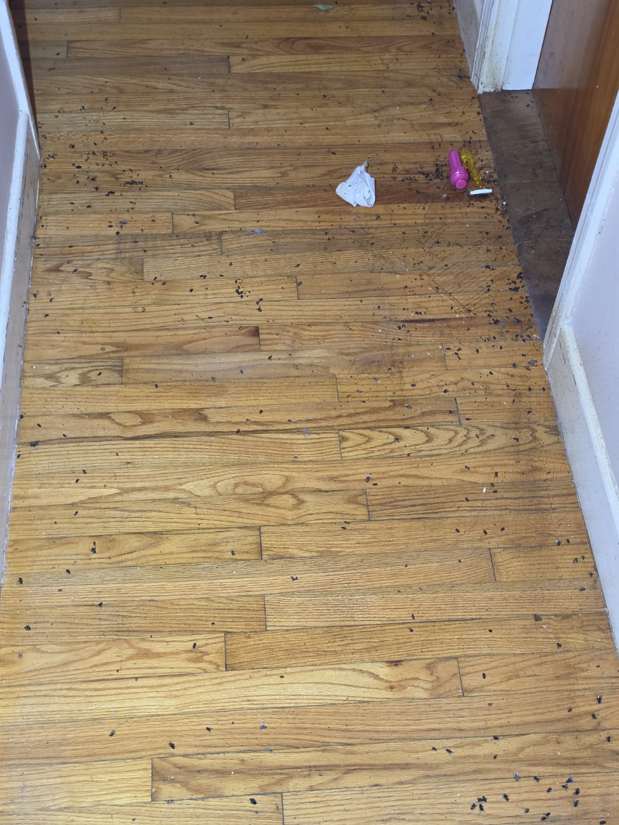
Droppings, nesting material, food caches, staining, and damaged materials often collect along walls, behind shelving, beneath stored boxes, and in areas that were inaccessible before the cleanout.
The post-removal inspection should focus on those newly exposed zones rather than only the center of the room.
Evaluate porous materials separately
Hard, intact surfaces and porous materials behave differently. Cardboard, insulation, fabric, heavily damaged wood products, and other porous materials can hold contamination or odor in ways that smooth surfaces do not.
The condition and intended future use of the space should guide whether materials are cleaned, removed, or evaluated further.
Do not create unnecessary dust
Rodent-contaminated dust and debris should not be treated like ordinary sweeping material. The work method should avoid unnecessary airborne disturbance and should match the actual condition present.
This is one reason rodent-affected cleanouts may require a different process from ordinary junk removal.
Trace odor before deodorizing
Persistent odor may come from nesting, urine-affected materials, dead pests, contaminated insulation, or other hidden sources. Deodorizing before identifying the source can waste time.
A more reliable sequence is source identification, removal or cleaning, then odor treatment if it is still necessary.
Document what remains outside the scope
If the cleanout exposes contamination in wall cavities, inaccessible voids, ductwork, insulation, or structural areas not included in the original work, document it.
That lets the owner decide whether the next step is additional cleaning, selective removal, pest-control work, or another specialty service.
Local planning in Massachusetts
Rodent activity can affect basements, attics, garages, sheds, and vacant properties throughout Massachusetts. Older homes in the Merrimack Valley and North Shore often include concealed storage areas and unfinished spaces where contamination can remain hidden until contents are removed.
The practical takeaway
After a rodent-affected cleanout, inspect the newly exposed surfaces, separate porous from cleanable materials, avoid unnecessary dust, and identify remaining sources before deciding what additional cleaning is appropriate.
For a property-specific plan, start with photos or contact Junk Response. You can also review our Q&A for pricing, cleanout labor, demolition, specialty conditions, and commercial workflows.

