
JUNK RESPONSE GUIDE
Bird and Bat Droppings in Attics and Outbuildings: Why Junk Removal Alone May Not Be Enough
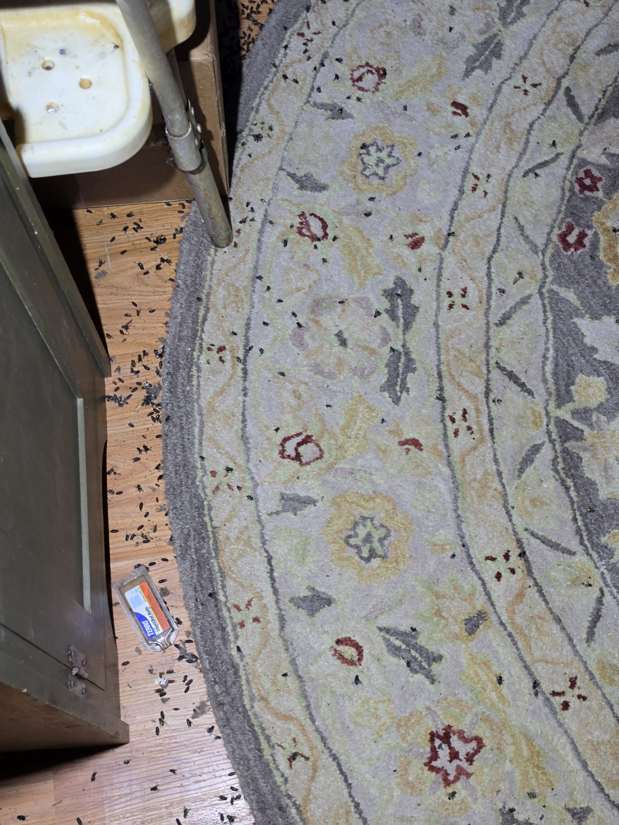
Attics, barns, sheds, and outbuildings can accumulate bird or bat droppings around stored contents, insulation, rafters, ledges, and floor surfaces. Removing the stored items may be necessary, but it does not automatically address the condition left behind.
Separate the contents from the surface condition
Boxes, furniture, insulation, stored materials, and loose debris may be affected by droppings, but the underlying floor, framing, ledges, or other surfaces can remain contaminated after the contents are gone.
The scope should distinguish between removing affected contents and cleaning the structure.
Access matters in attics and outbuildings
Low clearances, ladders, narrow openings, exposed framing, unstable flooring, and limited lighting can make removal more labor-intensive than a similar volume on a ground floor.
Photographs should show both the contaminated area and the route the crew must use.
Avoid treating droppings like ordinary dust
Heavy accumulations should not be handled the same way as ordinary sweeping debris. The work method should match the actual condition and avoid unnecessary disturbance.
This is one reason specialty review is appropriate before ordinary junk-removal pricing is applied.
Porous materials may need separate decisions
Insulation, cardboard, fabrics, damaged wood products, and other porous materials can be more difficult to clean than smooth surfaces.
Whether they are removed or retained depends on their condition, the extent of impact, and the intended future use of the space.
Fix the source of re-entry separately
Cleaning does not prevent animals from returning. Entry points, nesting access, and pest or wildlife control are separate issues that should be addressed by the appropriate professional.
Otherwise, the same condition can return after the cleanup.
Local planning in Massachusetts
Bird and bat activity can affect attics, barns, garages, sheds, and older outbuildings throughout the North Shore and Merrimack Valley. These spaces often combine difficult access with long-stored contents, so removal and specialty cleaning should be planned together.
The practical takeaway
When droppings are present, do not treat the project as ordinary hauling. Remove affected contents, evaluate the exposed surfaces and porous materials, and address the animal-entry problem separately.
For a property-specific plan, start with photos or contact Junk Response. You can also review our Q&A for pricing, cleanout labor, demolition, specialty conditions, and commercial workflows.

